SES Water is asking customers to make small adjustments to their daily routines as prolonged hot, dry weather continues to place increased demand on water supplies. Individual actions may seem small, but collectively they can make a meaningful difference. These simple changes also provide an opportunity for families to adopt more water-efficient behaviours and reduce water use at home in the long term.
Saving water is more important than ever as the Met Office has announced that England and Wales have provisionally recorded their driest July on record, with Southern England seeing its driest month ever recorded, in a series dating back to 1836.
To help maintain supplies for customers during this sustained hot weather and protect the local environment, SES Water is asking customers, businesses and visitors to the area to use water with care by slightly altering their daily routines to save water.
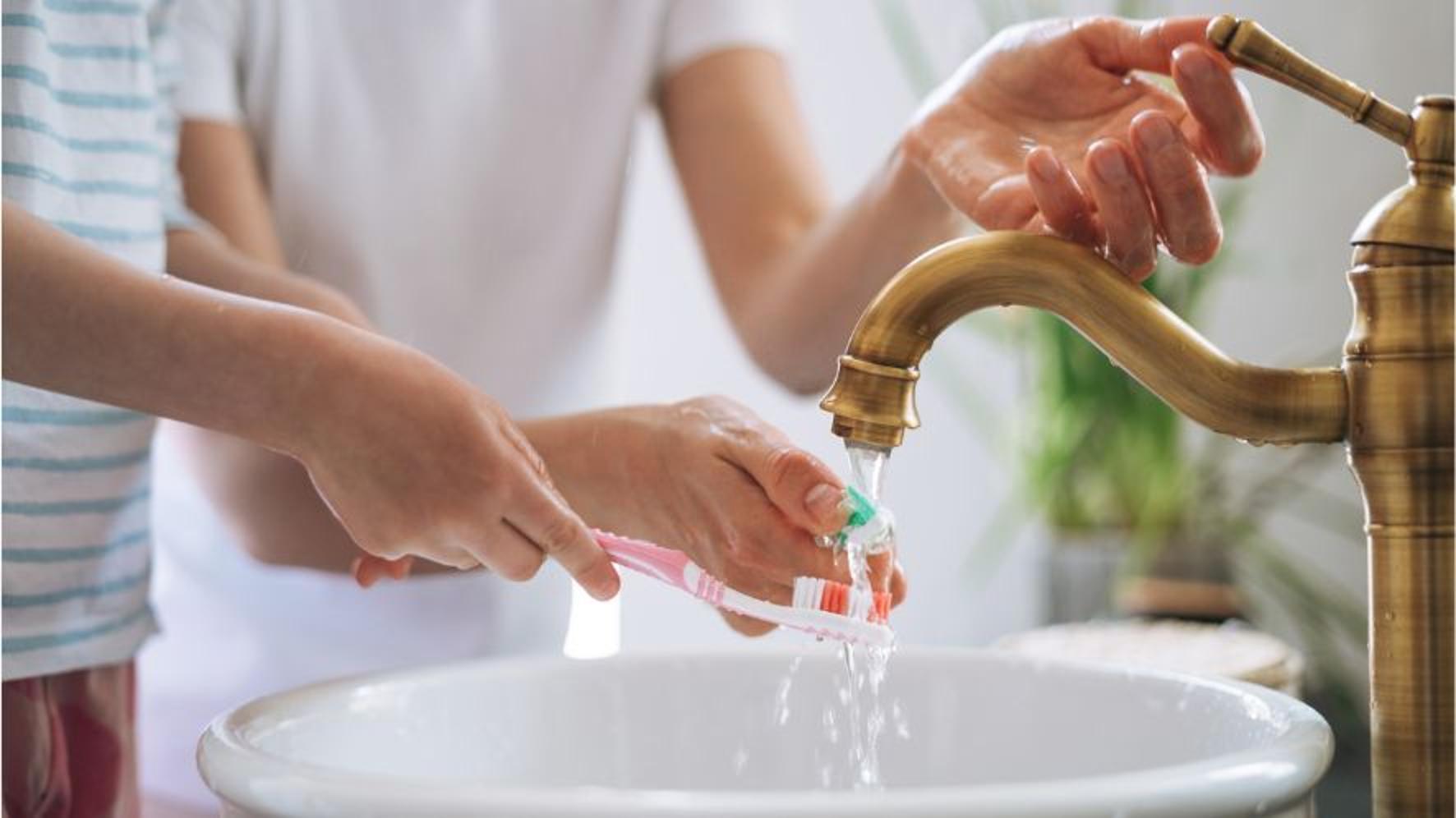
1.Brush your teeth with a 2-minute timer, whilst the timer is running and you are brushing your teeth, keep the tap turned off to save unnecessary water use.
A standard tap will use 10 litres per minute, leaving the tap running whilst brushing your teeth can waste 20 litres of water. Doing that twice a day for a year will waste nearly 15,000 litres.
2. Take a 4-minute shower, to keep track of time use SES Water’s shower karaoke playlist, full of perfectly timed shower songs.
A standard showerhead uses around 12 litres per minute; so every minute you can shave off your shower time adds up.
3. Use a watering can to water plants in the morning or the evening to prevent evaporation during afternoon sun.
You can also use unsalted cooking water, or old water from a pet bowl, to water plants.
4. Fill up a jug of water and keep it in the fridge, this way you can stay hydrated all day without running taps longer than needed whilst waiting for cold water.
By placing a jug under the tap until it runs cold, or under the shower until it runs hot, you can also save water to use for watering plants.
5. Ensure dishwashers and washing machines only run with full loads. Load the dishwasher with dishes from dinner last night and breakfast to ensure it is a full load to cut down on cycles and the amount of water they use.
Both dishwashers and washing machines can use around 40 litres of water per cycle, with older models using much more.
6. Check for any dripping taps or leaky loos.
A leaking toilet can waste up to 400 litres of water a day, making it one of the biggest sources of household water waste and an important focus for water conservation.
Many toilet leaks are silent and go unnoticed. For more information on carrying out a toilet roll test and fixing a leaking toilet, visit How to fix a leaky loo | SES Water
Megan Williams, Water Efficiency Manager at SES Water, said: "Our teams have been working tirelessly to protect supplies for customers. We've maximised water production wherever possible, increased leak detection and repairs, moved water around our network and introduced a wide range of operational measures to make the best use of the water available.
Customers can help us protect the region’s water supplies by saving water in small, easy ways without disturbing their daily routines.
Climate change is showing us that weather patterns are going to be less predictable and put more pressure on our resources due to longer periods of warm, dry weather. That’s why it’s so important we all work together to be more water aware and build more resilience whatever the weather.”